1
2
3
4
5
6
7
8
9

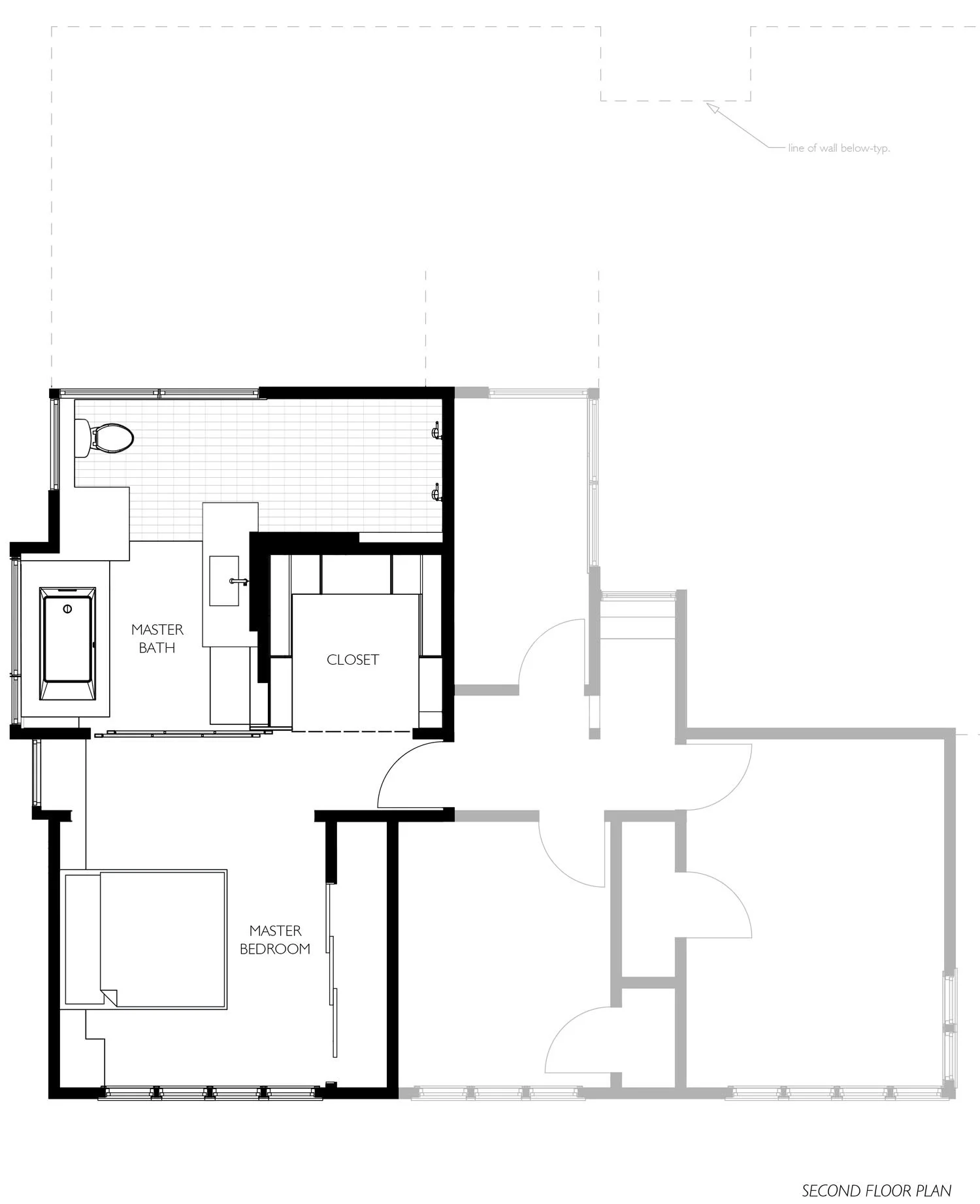
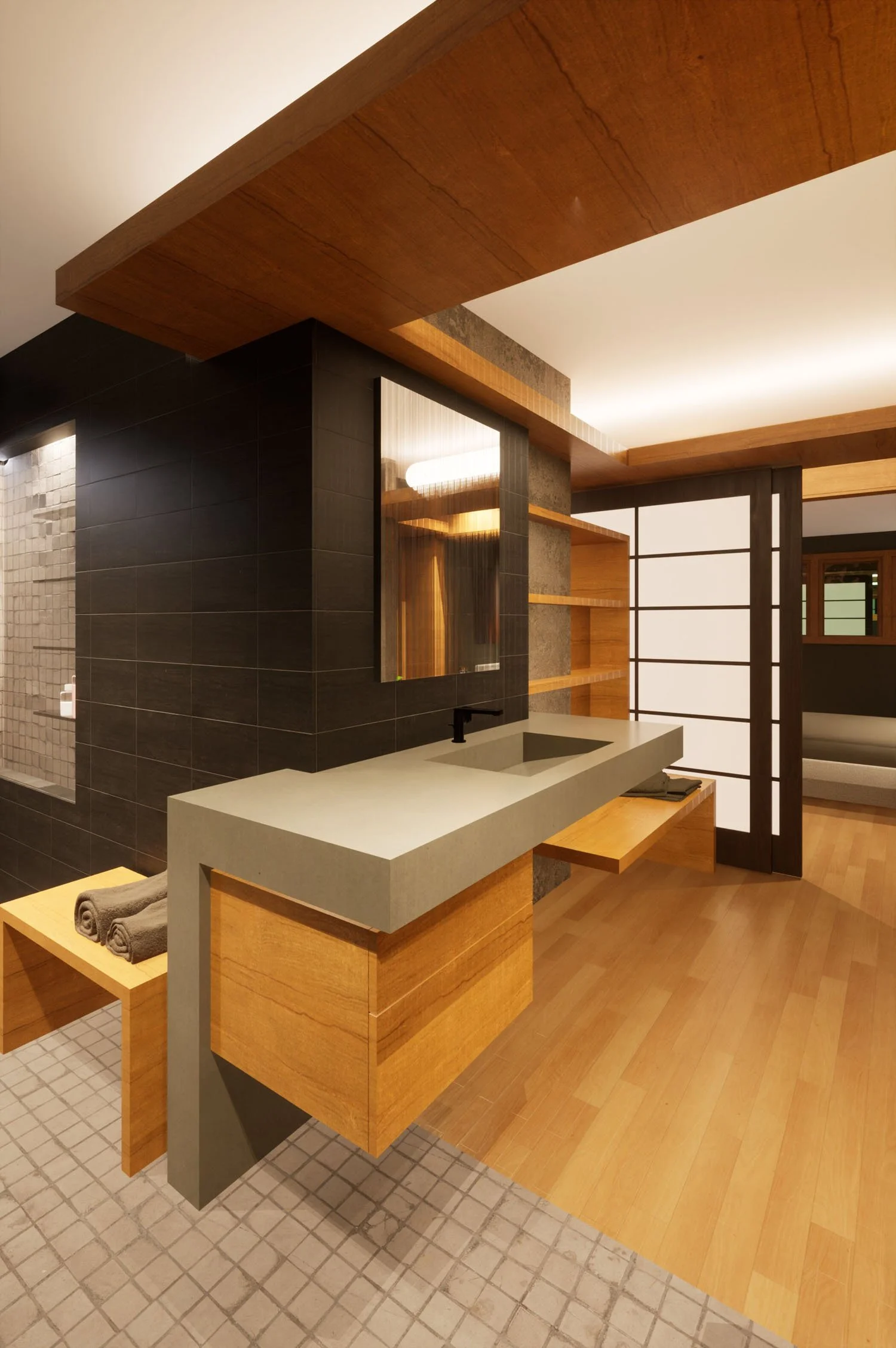
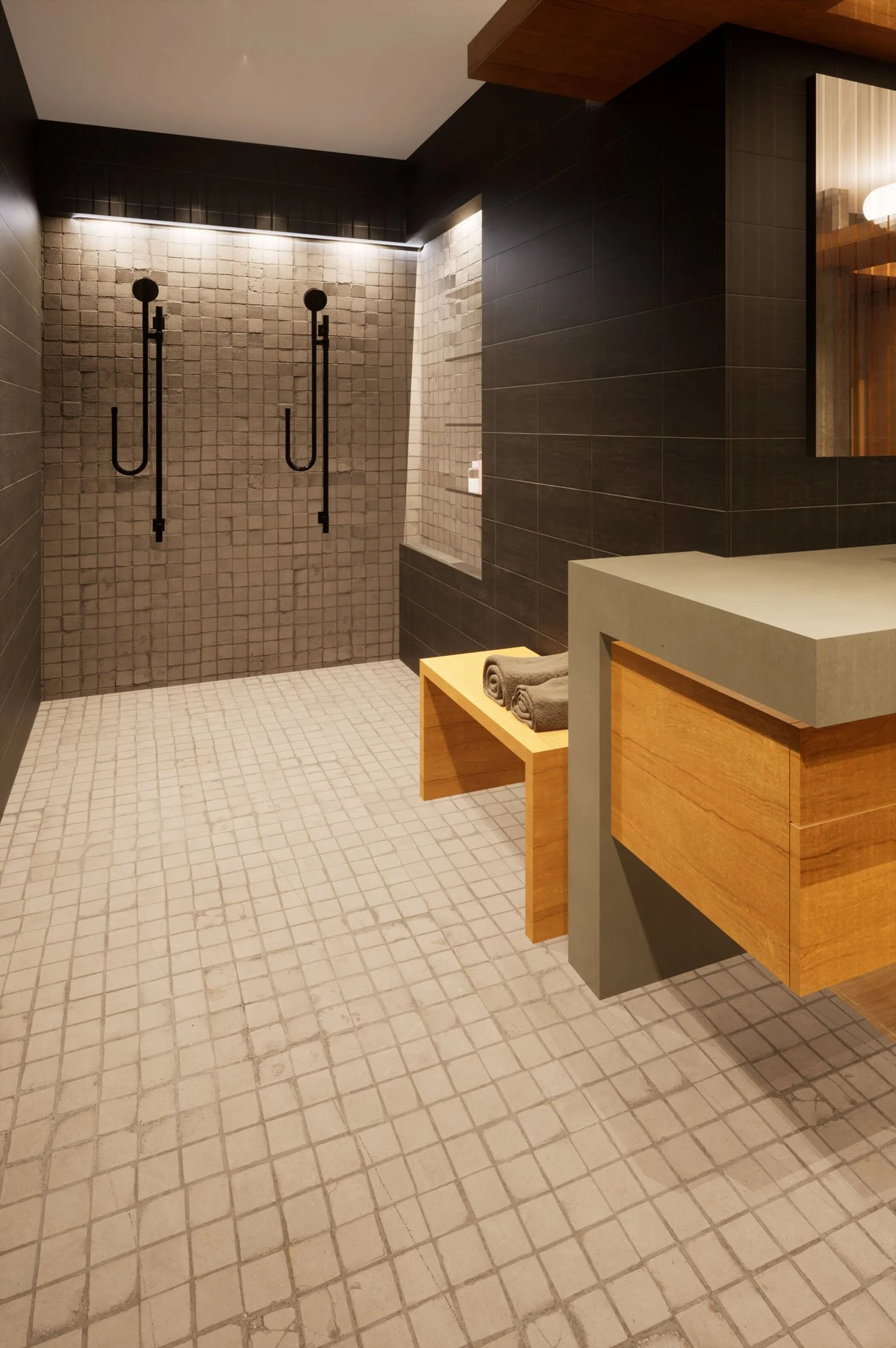
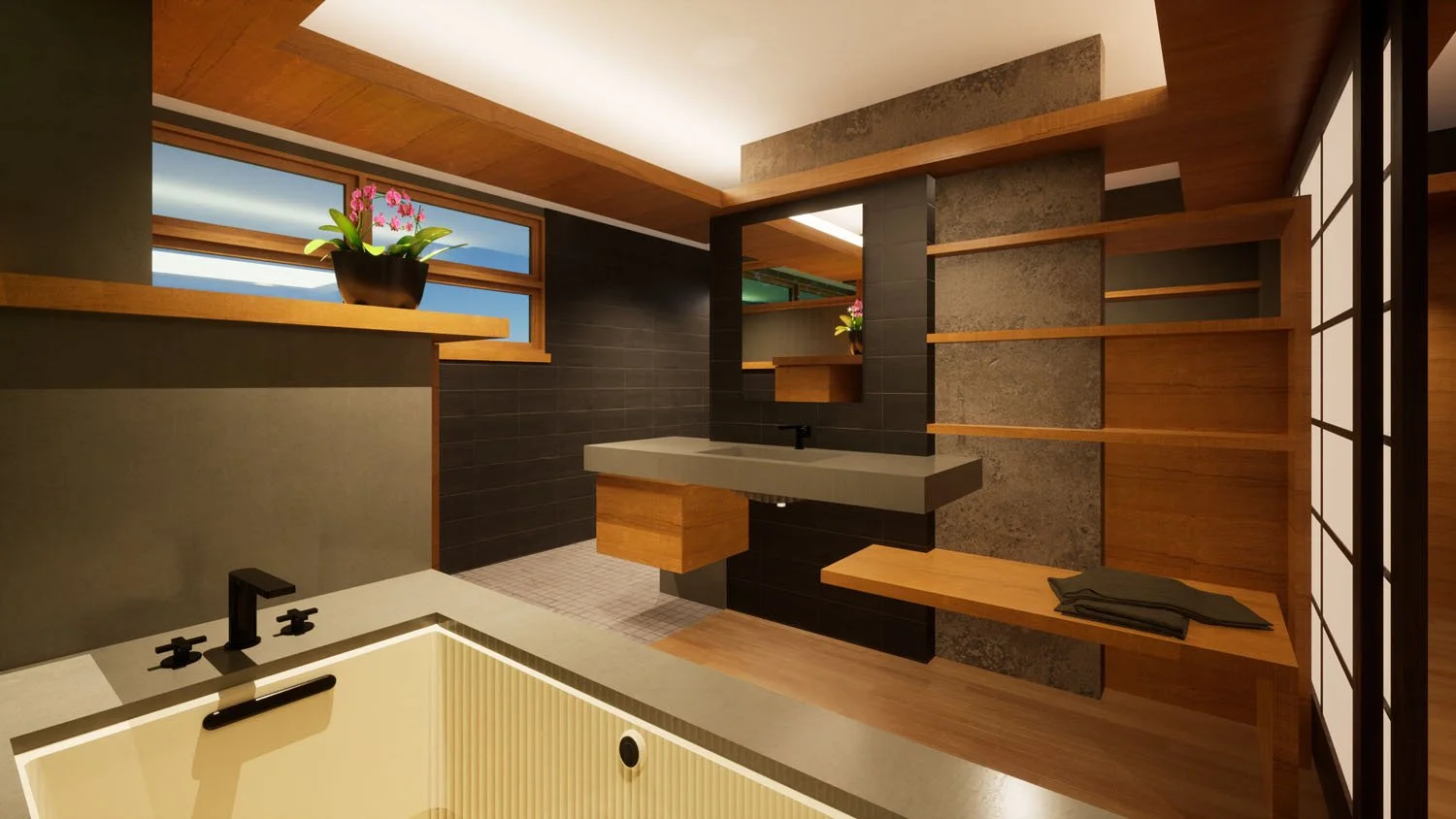
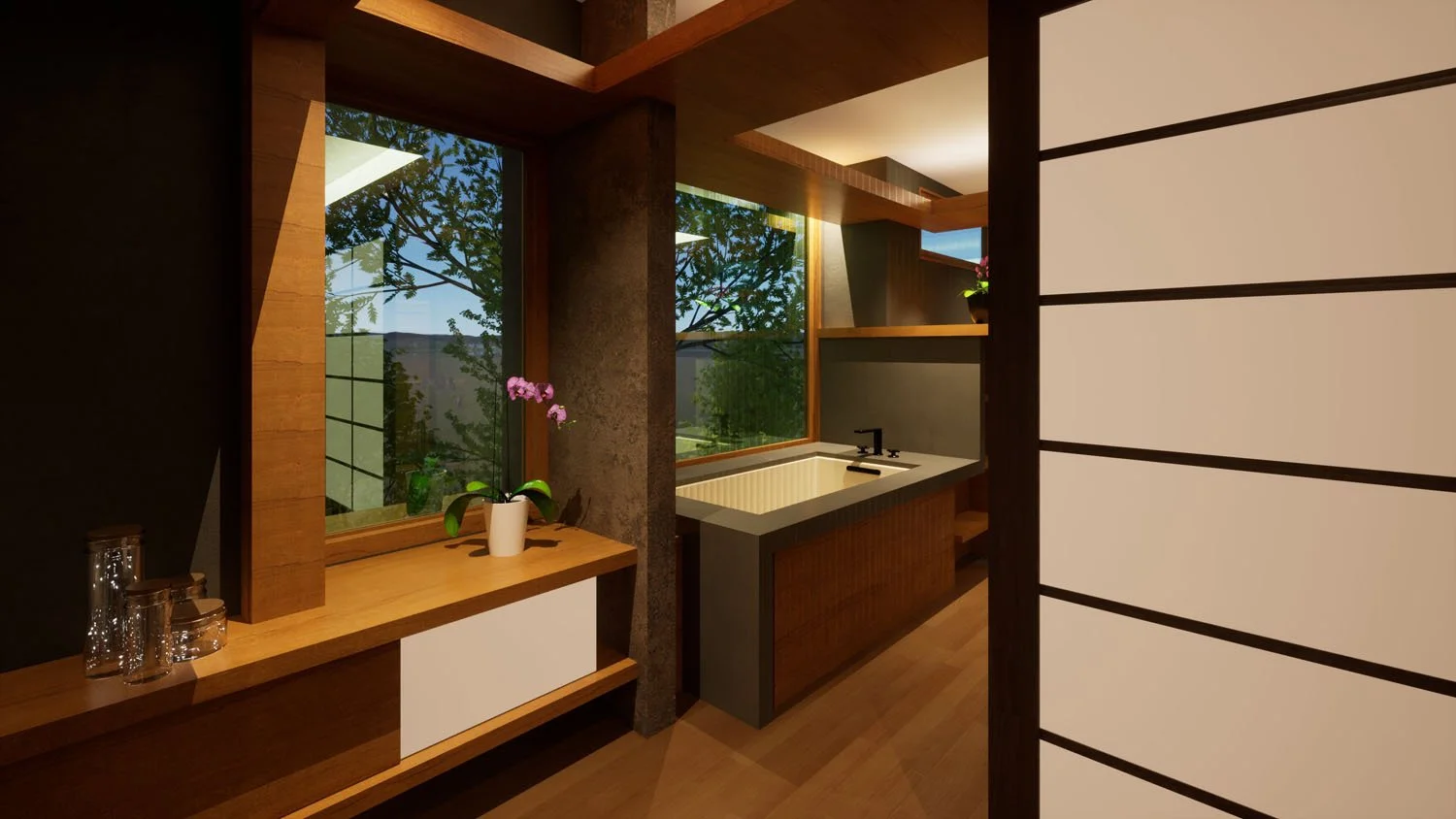
This unbuilt remodeling design reimagines a primary bath within a 1950s mid-century modern home originally designed by Milwaukee architect Lilian Leenhouts. The intervention was conceived as a quiet dialogue between the home’s modernist lineage, Frank Lloyd Wright’s organic principles, and East Asian ideas of space, light, and perception.
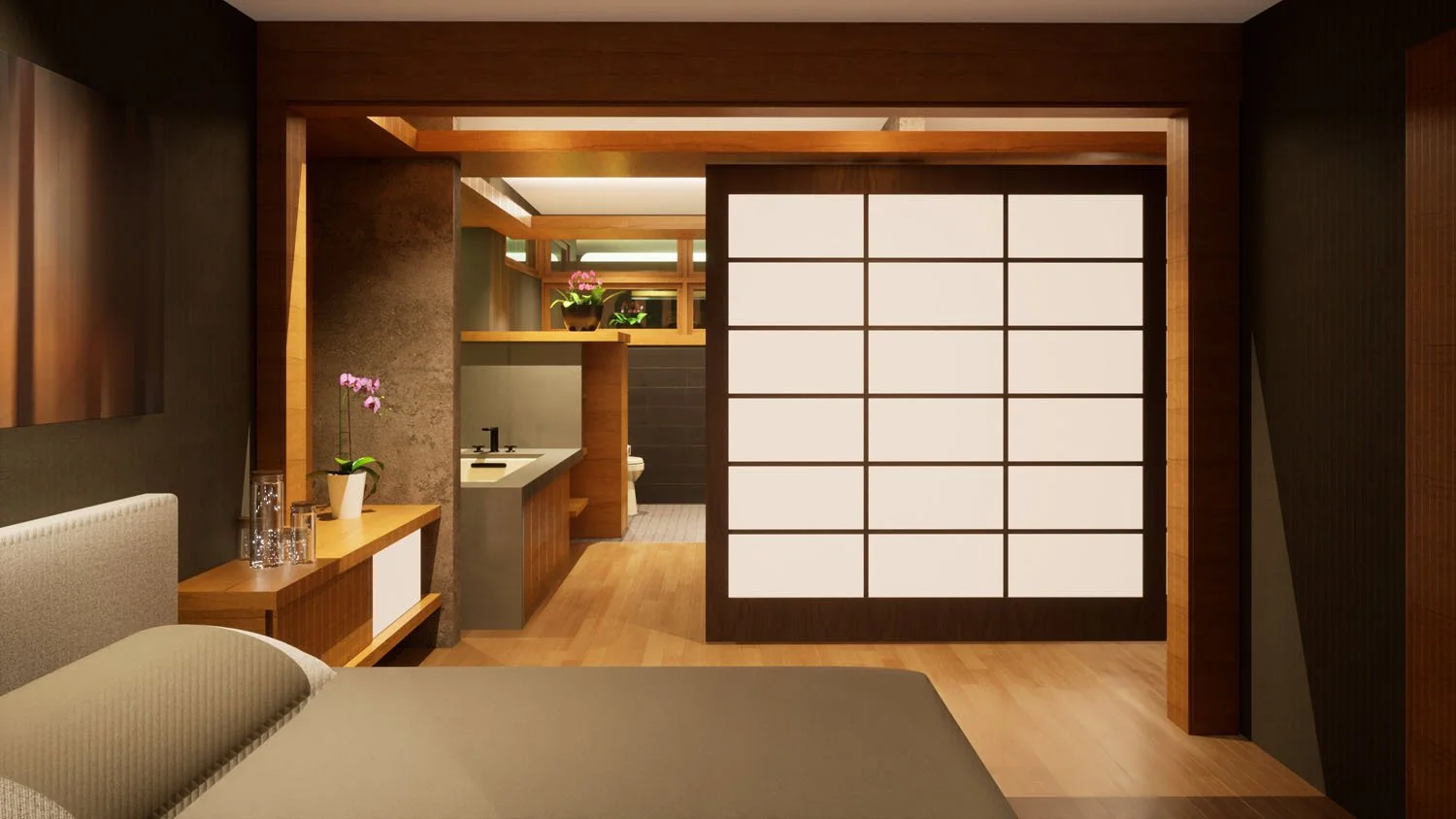
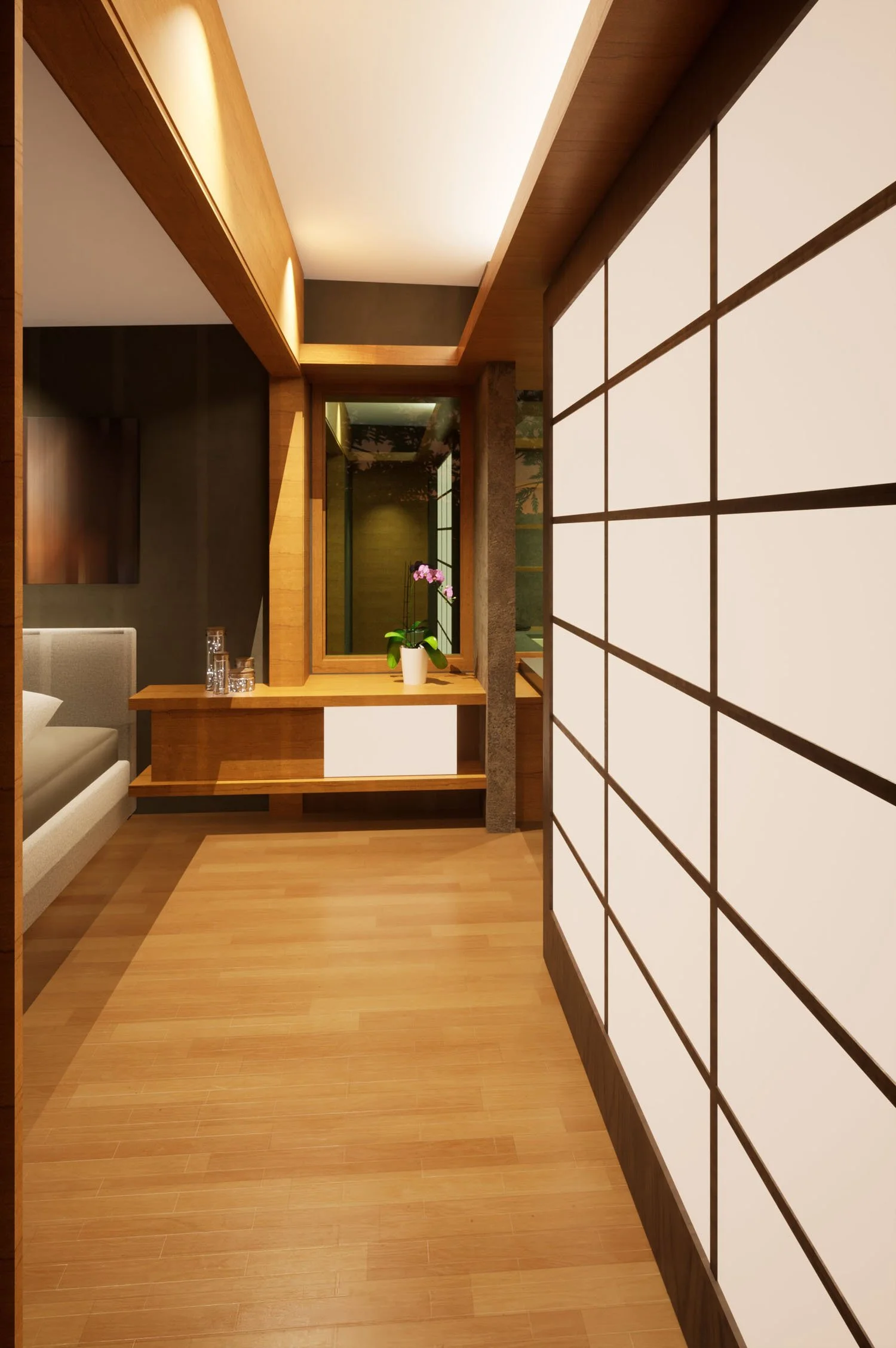
The bath is organized as a continuous, flowing sequence rather than a single enclosed room—an articulated spatial field in which partial screens, ceiling planes, and built-in elements define zones without severing continuity. This approach echoes Wright’s conception of space as something revealed through movement, while drawing on the Japanese concept of miegakure—the beauty of partial concealment—where spaces unfold gradually rather than being fully disclosed at once.
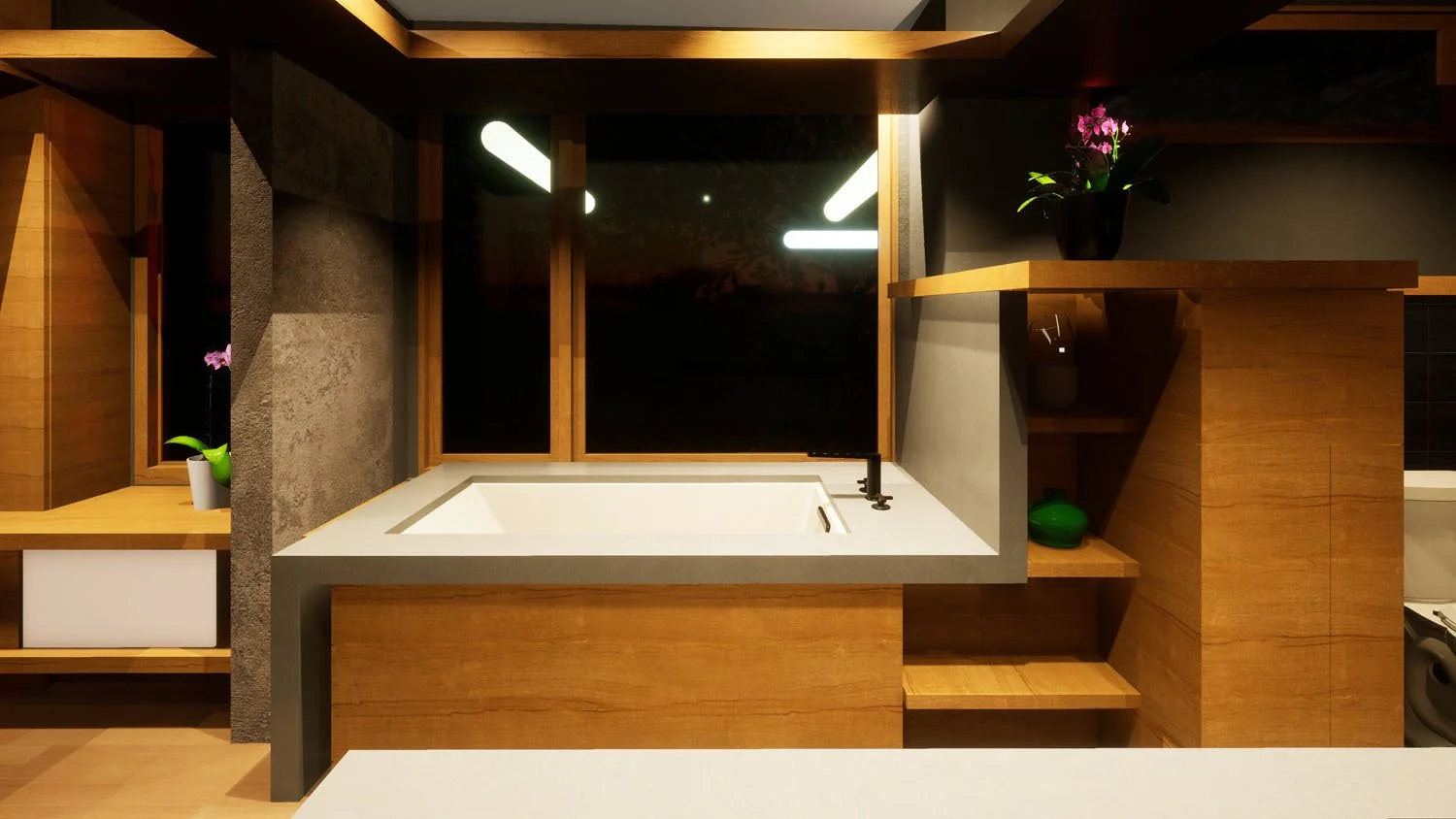
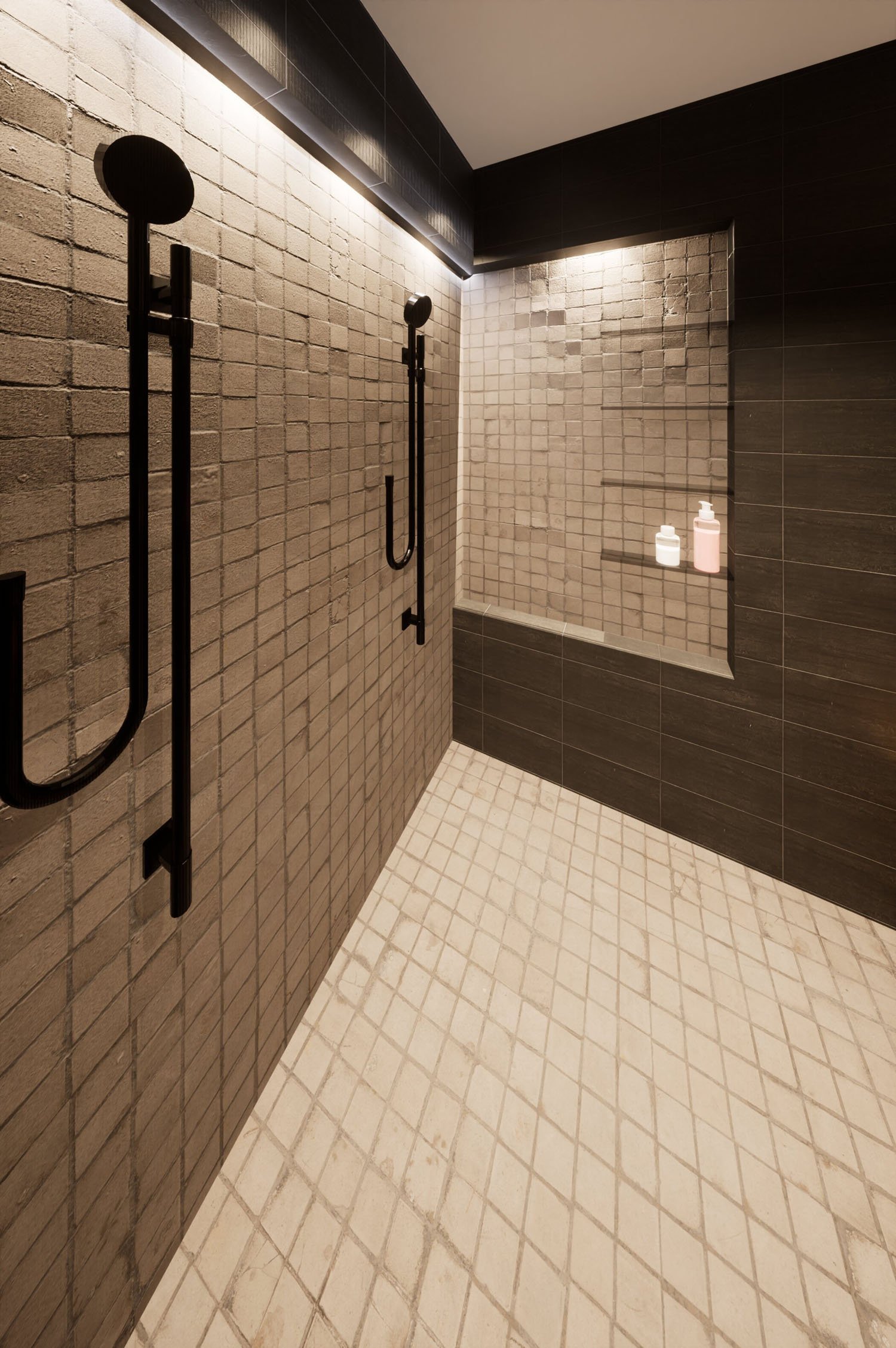
Influenced by Jun’ichirō Tanizaki’s In Praise of Shadows, the design resists the contemporary “white box” bath in favor of darker, warmer materials that deepen shadow and heighten sensory experience. Wood, stone, and softly modulated light create a sense of enclosure and calm, allowing texture, proportion, and reflection to emerge subtly over time. Although realized only through renderings, the project stands as a fully developed design study exploring how organic architecture and Asian spatial sensibilities can enrich modern domestic ritual.
Asian Bathroom Remodeling Layout
Asian Bathroom Remodeling - Fox Point, WI
Asian Bathroom Remodeling - Fox Point, WI
Asian Bathroom Remodeling - Fox Point, WI
Asian Bathroom Remodeling - Fox Point, WI
Asian Bathroom Remodeling - Fox Point, WI
Asian Bathroom Remodeling - Fox Point, WI
Asian Bathroom Remodeling - Fox Point, WI
Asian Bathroom Remodeling - Fox Point, WI